An AI Brain That Runs Your Whole GoHighLevel Lifecycle, From the First Lead to the Repeat Job
A complete AI revenue lifecycle engine running on GoHighLevel for a home-services brand. It takes a lead from capture through triage, first touch, conversation, booking, onboarding, and retention, with an AI making the judgment at every stage. The whole engine runs webhook-only, so it needs no GoHighLevel API token and drops onto the base plan, and it sits on a five-layer reliability spine that makes the AI safe to trust with live customers.
- Role
- Solo build: architecture, AI decision design, n8n workflows, reliability spine, observability dashboard
- Tools
- GoHighLevel ,n8n ,Claude (Haiku + Sonnet) ,Gemini (failover) ,Supabase
Watch the walkthrough.
The problem
Triggers are easy, judgment is hard
Native GoHighLevel automation reacts to events. It does not triage a lead by how hot it is, read a reply in context to decide between answering and booking, or route an ambiguous case to a human. Judgment at every lifecycle stage is the actual deliverable, and it lives outside the CRM.
An AI that writes to customers has to be trusted
A wrong AI send is a burned lead. A real lifecycle engine has to know when it is unsure and hand off to a person instead of guessing, and it has to keep running when the model behind it has a bad minute.
The API path locks you to a plan tier
Reading and writing GoHighLevel through its API sits behind higher plan tiers and per-account tokens. An engine built on that dependency cannot drop onto most agency client accounts without a tier upgrade and a credential project.
The solution.
Architecture diagram, click to zoom
A webhook-only brain
GoHighLevel fires a webhook on every lifecycle event to one of seven n8n workflows. Each calls Claude for the judgment and writes the result back as a native GoHighLevel action. No API token, runs on the base plan, GoHighLevel stays the system of record.
Eight lifecycle stages with AI judgment
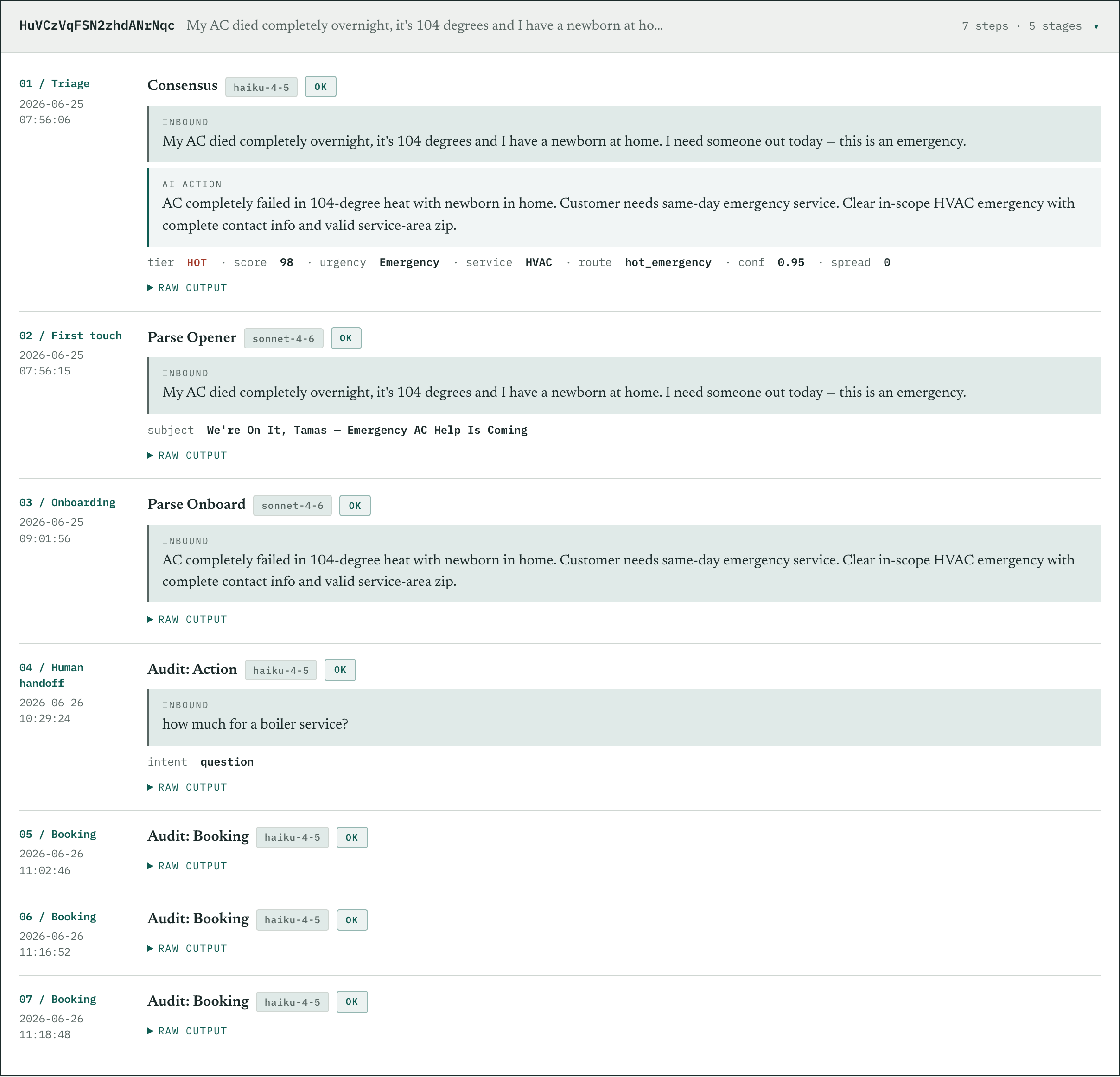
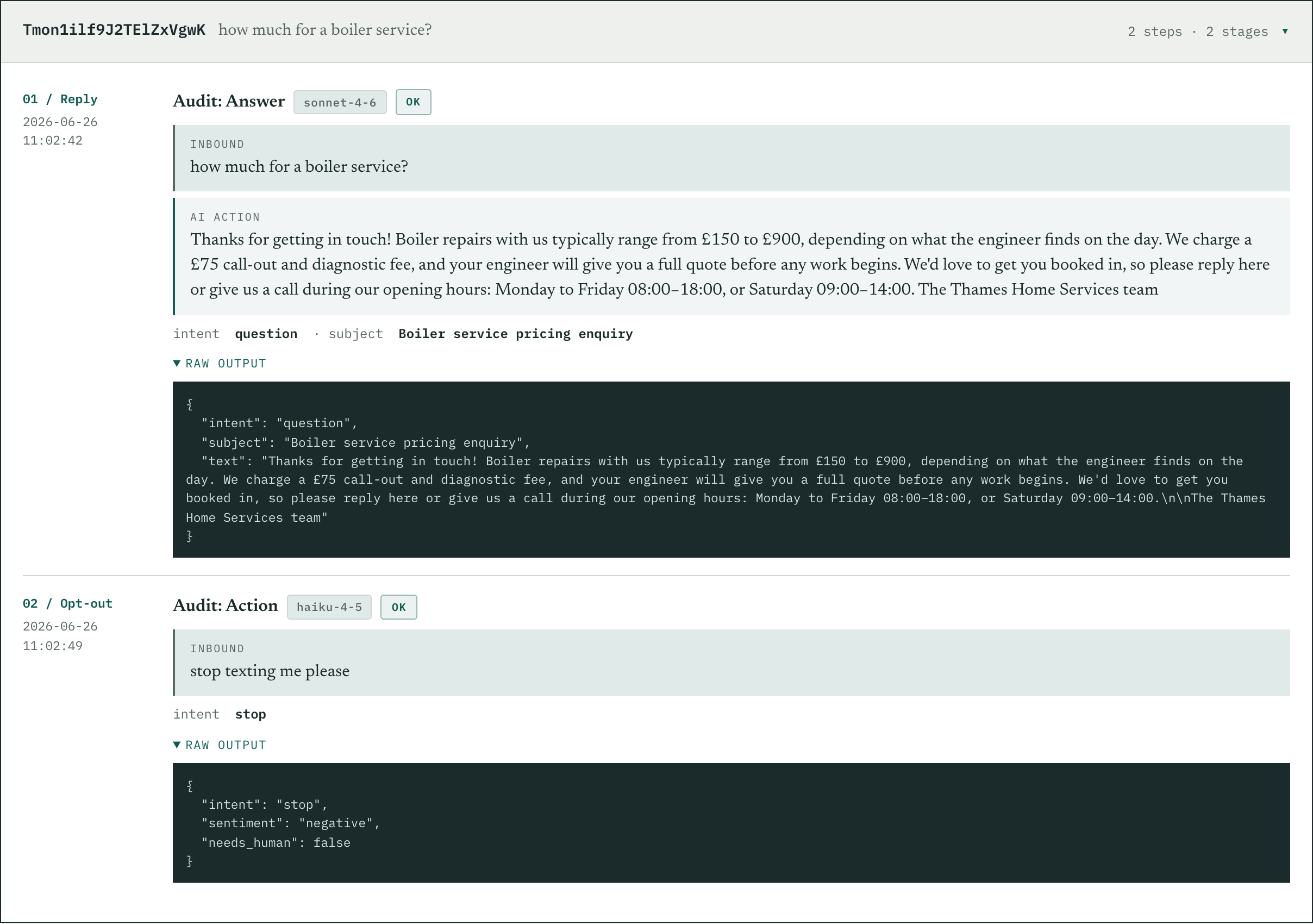
Capture and triage (three-pass consensus), first touch (brand-voice opener), conversation (intent read: answer, book, stop, or hand off), booking (link on the base plan, fixed-time appointment with API mode), onboarding (plan plus welcome sequence on a won job), and retention (review-and-maintenance pass on a completed job).
A five-layer reliability spine
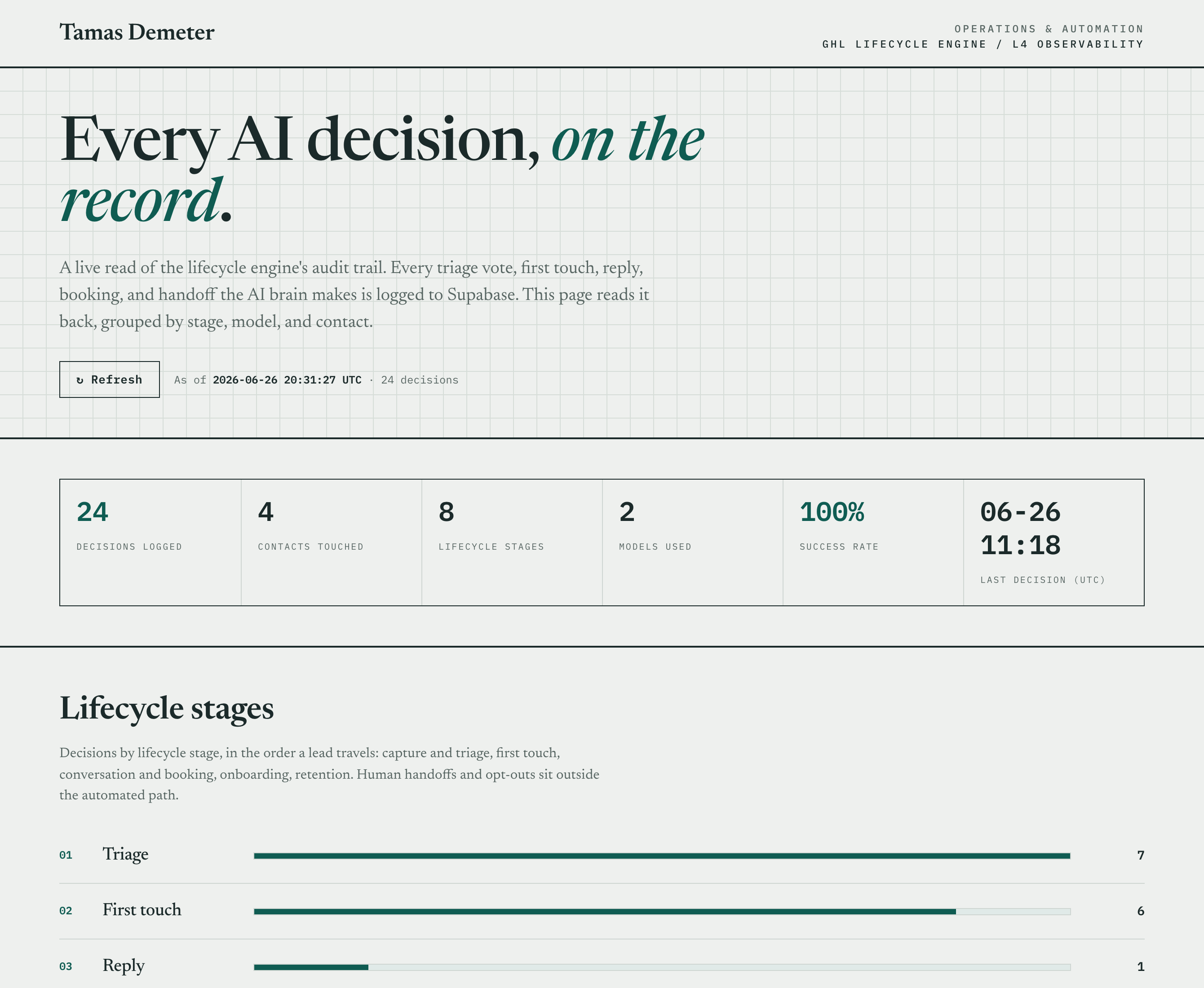
An audit trail of every AI decision; automatic Claude-to-Gemini failover; a human-in-the-loop gate for low-confidence or ambiguous calls; a live observability dashboard over the audit trail; and a one-file config that points the whole engine at a new tenant.
Screenshots
The impact
Demonstrated capability (build-facts)
- Eight lifecycle stages live, capture through retention
- Seven n8n workflows, all running
- Three-pass AI triage consensus that only routes on agreement
- Five-layer reliability spine: audit, failover, human-gate, observability, multi-tenant config
- Webhook-only architecture, runs on the base GoHighLevel plan with no API token
Why it is built this way
- The reliability spine is the product: it is what makes AI judgment safe to put in front of live customers
- Refusing the API dependency makes the engine portable across GoHighLevel accounts on the plan they already have
- One config file turns the build into a multi-tenant template, one account per config
Have a similar problem?
Tell me what is going on and I will tell you what I would do about it. No obligation.